

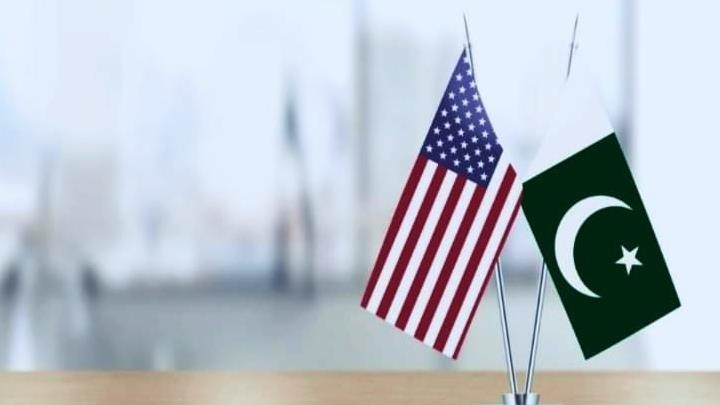
ISLAMABAD — The United States delivered a significant diplomatic message to Pakistan last week, formally reaffirming its long-term commitment to Islamabad and describing the country as “a vital partner for decades to come” in a statement that marks a dramatic shift from years of strained bilateral relations.
The statement, issued on January 28 by Natalie Baker, Charge d’Affaires at the US Embassy in Islamabad, came as Washington approached its 250th anniversary and framed the milestone as an opportunity to renew America’s partnerships based on mutual respect and shared interests.
A New Framework for Partnership
Baker’s statement, titled “America at 250: Strength, Sovereignty, and Shared Opportunity with Pakistan,” broke from conventional diplomatic language by explicitly positioning Pakistan as a cornerstone of US foreign policy in South Asia for the foreseeable future.
“America at 250 is about restoring national strength, strengthening democratic institutions, fostering economic growth, and reaffirming principled leadership grounded in realism and reciprocity,” Baker declared, emphasizing that strong nations make strong partnerships.
The statement represented a stark departure from the Biden administration’s approach, which had largely sidelined Pakistan while prioritizing India as the primary US partner in the region. Under President Donald Trump’s second term, which began in January 2025, bilateral relations have undergone what Pakistani officials describe as a “strategic reset.”
Economic Engagement Takes Center Stage
A key component of the renewed partnership involves substantial economic cooperation, particularly in critical minerals and infrastructure development. Baker highlighted the intensified economic engagement that has occurred since January 2025, including Prime Minister Shehbaz Sharif and Field Marshal Syed Asim Munir’s joint visit to the White House.
The US diplomat pointed to agreements between American and Pakistani firms in critical minerals, mining, and infrastructure sectors, supported by US financing tools, as evidence of how strategic investment can create jobs, enhance resilience, and strengthen prosperity for both nations.
Pakistan sits on an estimated $8 trillion worth of copper, lithium, cobalt, gold, antimony, and rare earth minerals. As Washington seeks to reduce dependence on Chinese-controlled supply chains—China controls over 90% of global refined rare earth output—Pakistan’s mineral wealth has become strategically significant.
Baker referenced the “Freedom 250 agenda,” linking America’s founding principles to a forward-looking foreign policy focused on prosperity, innovation, and durable partnerships. This represents a pragmatic shift toward economic realism in US-Pakistan relations, moving beyond the Afghanistan-centric framework that dominated the relationship for two decades.
Security Cooperation on New Terms
While security cooperation remains a pillar of bilateral relations, the current framework differs fundamentally from past arrangements. Baker emphasized that both nations share a commitment to counterterrorism and countering extremism while respecting sovereignty—a notable acknowledgment of Pakistani concerns about US military operations on its territory that characterized earlier periods.
The statement comes amid Pakistan’s evolving regional security role. Pakistani officials have been facilitating behind-the-scenes dialogue between Washington and Tehran regarding Iran’s nuclear program, positioning Islamabad as a trusted mediator capable of bridging adversarial powers.
Pakistan was formally invited to participate in upcoming nuclear negotiations between the US and Iran, making it the only non-Middle Eastern country officially included in these critical talks. This invitation, confirmed by Pakistan’s Foreign Office on February 3, underscores Islamabad’s elevated diplomatic status.
High-Level Diplomatic Activity in Islamabad
The January 28 statement coincided with significant diplomatic engagement in Pakistan’s capital. On the same day, Acting Chairman of the Senate Syedaal Khan Nasar met a three-member delegation from the United States Embassy, led by Political Counselor Shelley A. W. Saxen, at the Parliament House.
During the meeting, both sides discussed international politics, regional and global economic trends, peace and stability, the prevailing security situation, and effective utilization of resources. Nasar emphasized that due to the incumbent government’s effective diplomacy, Pakistan-US relations had strengthened and were now based on mutual respect, trust, and shared interests.
The acting chairman noted that US President Donald Trump held Pakistan in high regard and referenced recent meetings between President Trump, Prime Minister Sharif, and Chief of Defence Forces Field Marshal Munir. Members of the US delegation acknowledged Pakistan’s sacrifices in the fight against terrorism and pledged efforts to inform American companies about investment opportunities across various sectors in Pakistan.
Acknowledging the Pakistani Diaspora
Baker’s statement also acknowledged the contributions of overseas Pakistanis in medicine, science, business, and civic life in the United States. While reiterating that visas remain “a privilege, not a right,” she stressed that Pakistani nationals and the diaspora strengthen American communities and promote mutual understanding.
This balanced approach aims to address immigration concerns while maintaining people-to-people ties. The statement came weeks after Pakistan was among 75 countries affected by a US decision to indefinitely pause immigrant visa processing, a move the State Department attributed to concerns about potential reliance on public welfare programs.
Strategic Context: India’s Diminished Role
The timing and substance of Baker’s statement gain additional significance when viewed alongside Washington’s recently released 2026 National Defense Strategy. Unlike previous defense documents, particularly the 2022 strategy under the Biden administration which positioned India as a major defense partner and key pillar of US Asia strategy, the 2026 document makes no mention of India whatsoever.
The 24-page strategy also omits reference to the Quadrilateral Security Dialogue (Quad), which includes the US, India, Japan, and Australia. This conspicuous absence has been noted in Islamabad as reducing regional imbalance and validating Pakistan’s position that partnerships should not come at the expense of regional stability.
Additionally, the new strategy avoids framing China as an existential enemy, instead stating that Washington does not seek to “dominate, humiliate or strangle China” but rather aims for “a decent peace, on terms favorable to Americans but that China can also accept and live under.” For Pakistan, caught between its strategic partnership with China and improving relations with the United States, this recalibration significantly eases foreign policy pressures.
Looking Ahead: Optimism Tempered by Realism
Baker concluded her statement by expressing optimism about the future of US-Pakistan relations, stating that recent high-level engagements and agreements demonstrate the benefits of mutual respect, tangible results, and aligned economic and security interests.
“Pakistan’s resilience, innovation, and strategic importance offer the opportunity to create a lasting legacy of collaboration,” Baker said, adding that the United States reaffirms its commitment to a strong, respectful, and forward-looking relationship—one that will continue to deliver security, prosperity, and leadership “for the next 250 years.”
Pakistani officials have welcomed the statement as confirmation of the strategic reset that has been developing over the past year. However, analysts caution against overconfidence, noting that US-Pakistan relations have historically been volatile and subject to rapid changes based on shifting American priorities.
Maleeha Lodhi, Pakistan’s former ambassador to Washington, emphasized that while a hopeful beginning has been made, the relationship’s durability will depend on sustained follow-through from both sides. The challenge, she noted, will be translating diplomatic momentum into lasting institutional frameworks that can survive changes in political leadership in both countries.
Challenges Remain
Despite the positive trajectory, significant challenges persist. Pakistan continues to grapple with governance issues, economic vulnerabilities including external debt exceeding $130 billion, and security threats from militant groups, particularly in border regions rich in the very minerals that have attracted US interest.
A recent CNN investigation highlighted that Pakistan’s most valuable mineral deposits are located in areas wracked by decades-long jihadist insurgencies. Security forces have seized hundreds of US-made weapons—abandoned during the chaotic 2021 withdrawal from Afghanistan—from militants, complicating efforts to secure these strategically important regions.
Economic indicators, however, show improvement. Official foreign exchange reserves stood at $16.1 billion as of late January, with forecasts suggesting reserves could exceed $40 billion by December 2026. The Pakistani rupee has remained relatively firm against the dollar, supported by investment agreements and Pakistan’s return to global bond markets.
Conclusion
The January 28 statement from the US Embassy represents the most explicit affirmation of America’s commitment to Pakistan in years. By framing the relationship as vital for “decades to come” and linking it to America’s 250th anniversary celebrations, Washington has signaled that the partnership transcends immediate tactical concerns.
For Pakistan, the statement validates a year of intensive diplomatic engagement and strategic repositioning. The challenge now is to ensure that warm words translate into durable institutional cooperation in economic development, security partnership, and regional stability.
As both nations navigate an increasingly complex geopolitical landscape, the success of this reset will ultimately be measured not by statements or symbolic gestures, but by the concrete benefits delivered to both countries’ citizens and the stability it brings to a volatile region. The foundation has been laid; the hard work of building upon it has just begun.
