

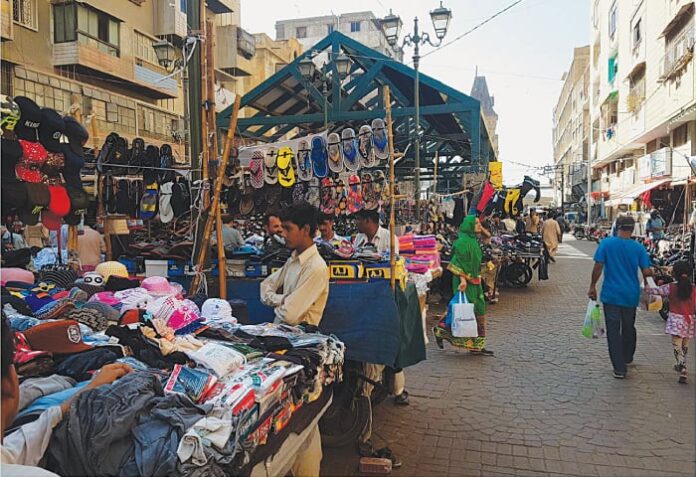
Khyber Pakhtunkhwa is poised to formally recognise and protect its Rs380 billion street economy through a landmark law that aims to secure the rights and livelihoods of thousands of street vendors across the province.
The provincial government has finalised the Ehsaas Rehribaan Livelihood Protection Bill 2025, which will now be sent to the cabinet for approval before being tabled in the KP Assembly. Once enacted, KP is expected to become the first province in Pakistan to provide comprehensive legal protection to street vendors as a distinct category of workers.
According to official estimates, the bill is designed to safeguard around 140,000 street vendors, whose small-scale businesses form a critical part of the urban and semi-urban economy. The legislation seeks to shield them from practices that have long plagued the informal sector, including unlawful eviction, harassment, extortion and ad hoc anti-encroachment drives.
Chief Minister Muhammad Sohail Afridi has described the proposed law as a major step toward formalising the street economy and ensuring that low-income workers are brought under a framework of rights and due process. Under the bill, no official, authority or private individual will be allowed to forcibly seize vending spaces, displace vendors or demand illegal payments. Acts of intimidation, coercion, rent-seeking or extortion will be treated as serious criminal offences.
A key feature of the legislation is its emphasis on due-process protections. Anti-encroachment action against registered vendors will not be permissible without prior notice, evidence-based justification and strict compliance with legal procedures. The government says this is intended to put an end to sudden crackdowns that wipe out livelihoods overnight.
Beyond legal safeguards, the Ehsaas Rehribaan Bill aims to bring vendors into the formal financial and social protection system. It proposes measures for access to microfinance, credit, insurance and emergency support, so that vendors—many of whom operate on very slim margins—can stabilise and gradually expand their businesses.
The draft law also mandates that registered street vendors be given representation in Tehsil Vending Committees, which will oversee vending zones, handle registration, and resolve disputes. This is designed to ensure that those directly affected by regulation have a say in how public spaces and vending areas are managed.
The provincial government views the bill as a crucial step in organising the street economy, reducing exploitation, and strengthening protections for low-income workers who contribute significantly to local commerce and urban life.
If passed and implemented effectively, the Ehsaas Rehribaan Livelihood Protection Bill 2025 could become a model for other provinces looking to regulate and support their own street economies.
