

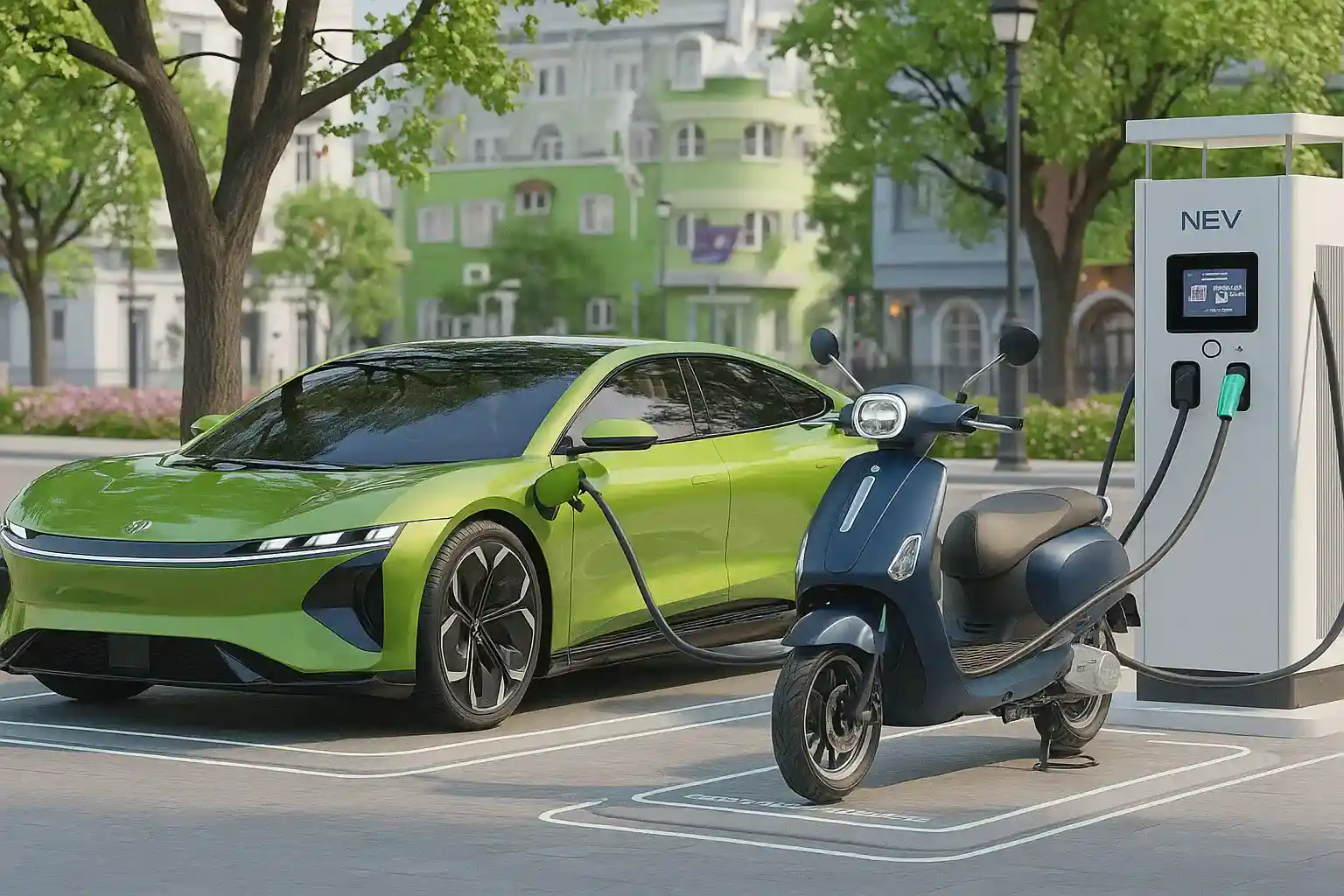
Pakistan has set an ambitious target to install 3,000 electric vehicle (EV) charging stations across the country between 2025 and 2030, in a move aimed at accelerating the transition toward cleaner and more sustainable transportation.
According to an official document shared with the state news agency APP, the government has allocated 240 EV charging stations for the current fiscal year, forming the first phase of a broader nationwide rollout.
Under the plan, the charging stations will be established by private sector companies, while the overall framework, standards, and monitoring will be jointly overseen by multiple public bodies. These include the Ministry of Industries and Production, the National Energy Efficiency and Conservation Authority (NEECA), the Ministry of Energy, the National Electric Power Regulatory Authority (NEPRA), and relevant power distribution companies (DISCOs).
Officials said the initiative is a central pillar of the Draft New Energy Vehicle Policy, developed by the Ministry of Industries and Production to support electric mobility adoption in Pakistan. The policy seeks to address one of the biggest barriers to EV uptake in the country: the lack of accessible and reliable charging infrastructure.
Progress on EV infrastructure has already begun. Since the issuance of the Electric Vehicle Charging Infrastructure and Battery Swapping Stations Regulations on 24 October 2024, NEECA has granted 72 licenses for EV charging facilities. These licences mark the initial wave of formal, regulated EV charging points and are expected to expand rapidly as the new policy is implemented.
The government views the deployment of EV infrastructure as a key step toward reducing dependence on imported fossil fuels, cutting urban air pollution, and aligning Pakistan’s transport sector with global trends in clean energy and climate action.
If fully implemented, the plan to install 3,000 charging stations by 2030 could significantly improve confidence among consumers and investors in Pakistan’s EV market, while providing critical support for future electric buses, two- and three-wheelers, and private vehicles across major cities and highways.
