

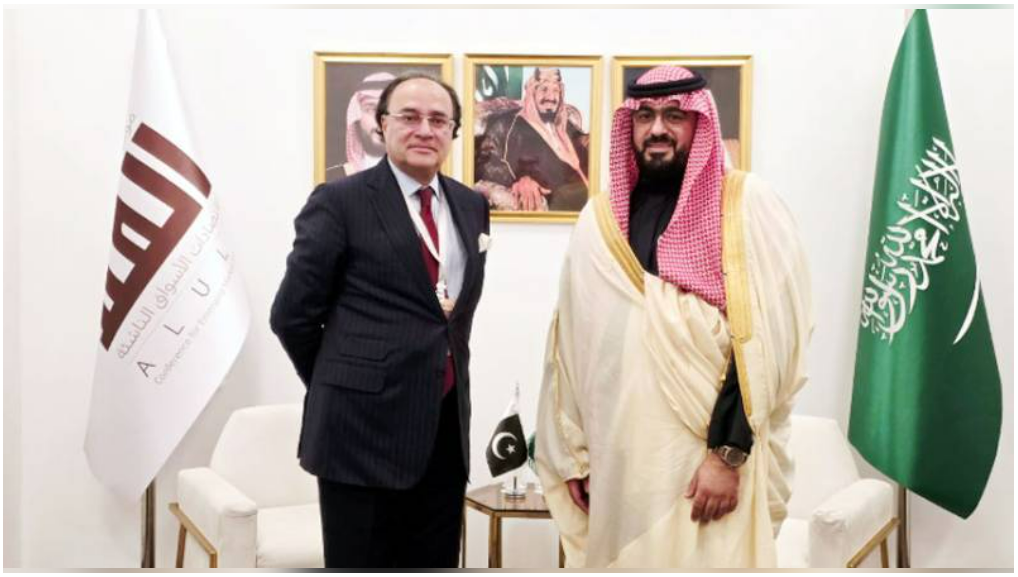
ALULA, Saudi Arabia – February 9, 2026 – The World Bank has reaffirmed its historic commitment to Pakistan’s decade-long development program, pledging $20 billion in support from 2026 to 2035 under the Country Partnership Framework (CPF). The commitment was reaffirmed during high-level discussions at the AlUla Conference for Emerging Market Economies in Saudi Arabia, where Finance Minister Senator Muhammad Aurangzeb met with World Bank Managing Director Anna Bjerde.
A Landmark Partnership Framework
Originally announced in January 2025 and formally approved by the World Bank Group’s Board of Executive Directors, the CPF represents an unprecedented long-term investment in Pakistan’s economic transformation and sustainable development. The framework marks a strategic shift from short-term adjustment programs to focused, sustained interventions in critical development sectors over the next decade.
Prime Minister Shehbaz Sharif has described the partnership as “first-of-its-kind,” reflecting the World Bank’s confidence in Pakistan’s economic resilience and potential for growth despite ongoing financial challenges. The South Asian nation, currently navigating a $7 billion International Monetary Fund bailout program, views this partnership as a crucial anchor for long-term stability and progress.
Key Focus Areas and Investment Priorities
The $20 billion development program will concentrate on six critical outcomes aligned with Pakistan’s most pressing development needs. Clean energy and climate resilience stand at the forefront of the partnership, addressing Pakistan’s vulnerability to climate change and its energy sector challenges. The framework prioritizes transitioning to renewable energy sources, reducing reliance on fossil fuels, and enhancing energy efficiency across the country.
Education quality improvement and child nutrition, particularly addressing the critical issue of child stunting, form another pillar of the partnership. Health sector strengthening, infrastructure development, and fiscal reforms round out the comprehensive approach to Pakistan’s development challenges.
According to World Bank Country Director Najy Benhassine, the framework represents “a long-term anchor for our joint commitment with the government to address some of the most acute development challenges facing the country.” The lender indicated that annual commitments are expected to range between $1.5 billion and $2 billion starting in 2026, with disbursements contingent on available funding and fulfillment of project requirements.
AlUla Conference Reinforces Commitment
The February 2026 AlUla Conference provided an important platform for Pakistan and the World Bank to review progress and strengthen their partnership. During the meeting between Finance Minister Aurangzeb and Managing Director Bjerde, both parties discussed the implementation roadmap and emphasized the importance of effective execution to maximize developmental impact.
The discussions followed up on World Bank President Ajay Banga’s first official visit to Pakistan in early February 2026, where he met with Prime Minister Sharif to accelerate implementation and strengthen oversight of development priorities. The visit underscored the global institution’s commitment to helping Pakistan deliver reforms “at speed and scale.”
Anna Bjerde emphasized at the AlUla Conference that sustained engagement and effective execution are crucial to translating the $20 billion commitment into tangible outcomes. The World Bank stressed the importance of adopting focused approaches, introducing clear performance trackers, and ensuring robust implementation mechanisms.
Private Sector Growth and Structural Reforms
A key component of the CPF involves policy and institutional reforms designed to boost private sector growth and expand fiscal space for government investment in crucial areas. The framework acknowledges that Pakistan’s economic growth has been historically stunted by distortive policies benefiting only a few, with vested interests opposing growth-oriented reforms and progressive public spending in human capital and basic services.
The partnership emphasizes public-private partnerships as a means to attract foreign investment while reducing the fiscal burden on government coffers. With Pakistan facing an estimated annual infrastructure financing gap of approximately $10 billion, the World Bank’s investment aims to address critical deficits in transportation, water management, and urban planning.
Challenges and Path Forward
Despite the optimistic outlook, the World Bank acknowledges significant risks and challenges facing Pakistan’s development trajectory. The country’s external debt has exceeded $130 billion, raising concerns about debt sustainability. Political instability, governance challenges, and regional geopolitical tensions could impact investor confidence and economic stability.
Finance Minister Aurangzeb has reiterated Pakistan’s commitment to close collaboration with the World Bank Group, assuring full cooperation through relevant federal ministries and emphasizing the crucial role of provincial governments in ensuring better coordination, timely execution, and delivery of measurable results.
The World Bank has projected Pakistan’s economic growth at 2.8% for the current fiscal year, increasing to 3.2% next year and reaching 3.4% by 2027. Inflation is expected to gradually decrease from current levels, while the tax-to-GDP ratio is anticipated to improve incrementally over the coming years.
As the 10-year partnership unfolds, the success of this historic framework will depend on sustained political will, effective implementation, and coordination between federal and provincial authorities. For a nation of over 240 million people, the World Bank’s commitment represents not just financial support but a vote of confidence in Pakistan’s potential to overcome its challenges and achieve sustainable, inclusive development.
