

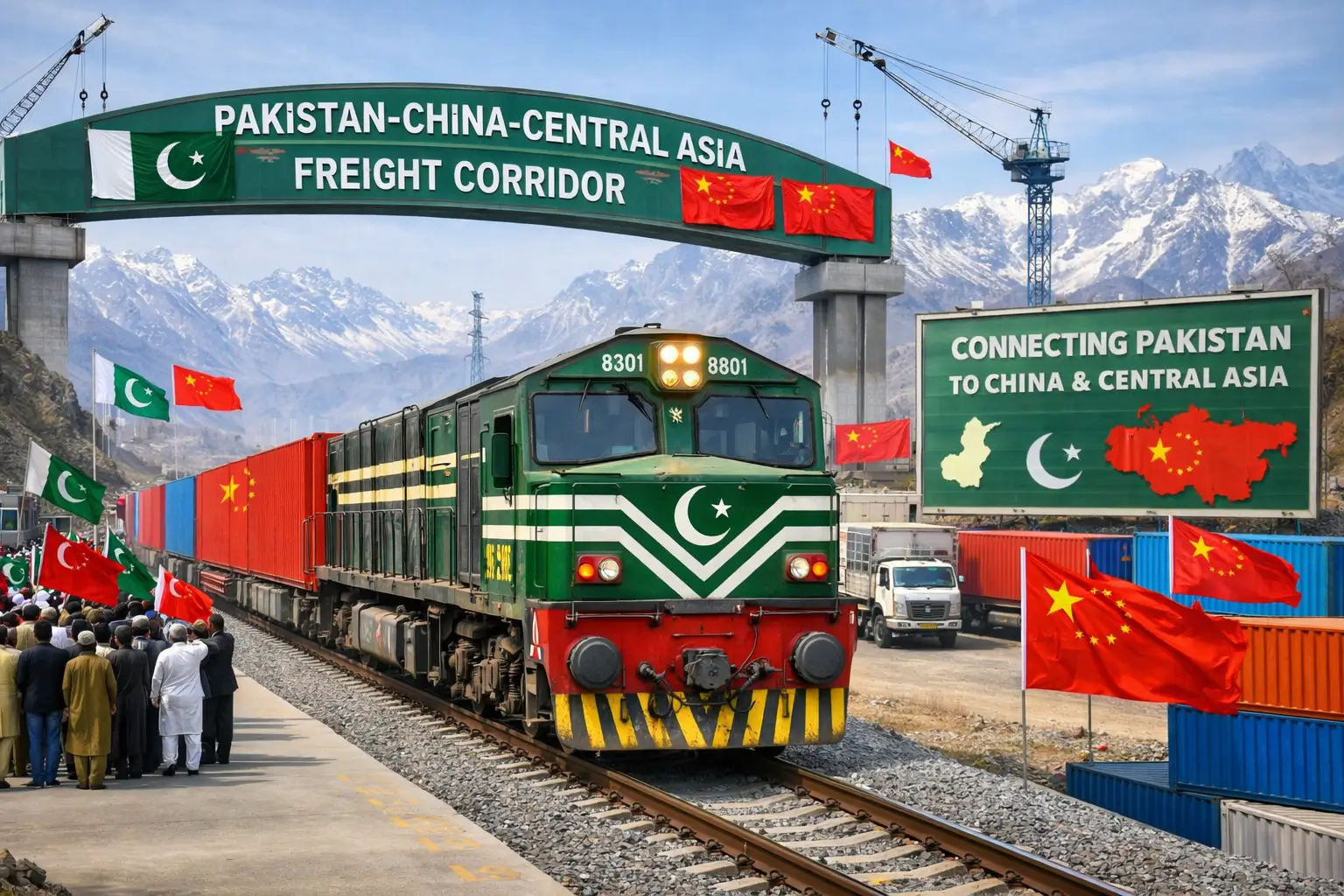
Pakistan has taken a major step toward improving regional trade and logistics infrastructure with the launch of the Pipri Dedicated Freight Corridor and Multimodal Logistics Park, a project designed to enhance the efficiency of cargo transportation and strengthen the country’s role as a regional trade hub.
The new freight corridor is being developed near Karachi, Pakistan’s largest commercial and port city. The project aims to connect major seaports with inland markets and international trade routes, allowing goods to move more efficiently across the country and beyond its borders.
The corridor will link cargo operations from Port of Karachi and other major ports to railway networks and highways that extend toward northern Pakistan and regional markets. By integrating rail, road, and port infrastructure into a single logistics system, the project is expected to significantly improve cargo movement and reduce delays in transportation.
The development of this logistics corridor is closely aligned with the broader infrastructure goals of the China‑Pakistan Economic Corridor, commonly known as CPEC. This large-scale economic partnership focuses on building roads, railways, energy projects, and trade infrastructure to improve connectivity between Pakistan and regional markets.
The Pipri freight corridor will function as a modern logistics hub, offering cargo consolidation, container handling, warehousing facilities, and efficient freight transportation services. This integrated approach will help streamline the movement of goods and reduce the overall cost of trade logistics.
Another key objective of the project is to reduce traffic congestion around Karachi’s busy port areas. Currently, a large number of heavy trucks move through urban areas to transport cargo from the ports to other regions of the country. By shifting more freight transportation to rail systems, the corridor will help reduce road congestion, improve traffic conditions, and decrease environmental pollution.
The project is also expected to bring significant economic benefits by improving Pakistan’s ability to handle larger volumes of international trade. With more efficient logistics infrastructure, exporters will be able to transport goods more quickly and cost-effectively to global markets.
Pakistan’s geographic location places it at an important crossroads between South Asia, Central Asia, and the Middle East, giving the country the potential to become a major transit hub for regional trade. Improved infrastructure projects like the Pipri freight corridor can help unlock this potential by connecting ports with inland transportation networks and international trade routes.
In addition to strengthening Pakistan’s export capacity, the corridor is also expected to support the growth of logistics services, warehousing industries, and transportation companies. These developments could create new business opportunities and employment across multiple sectors of the economy.
As Pakistan continues investing in infrastructure and trade connectivity, projects like the Pipri Dedicated Freight Corridor represent important steps toward building a more efficient logistics system and strengthening the country’s position in regional and global trade networks.
