
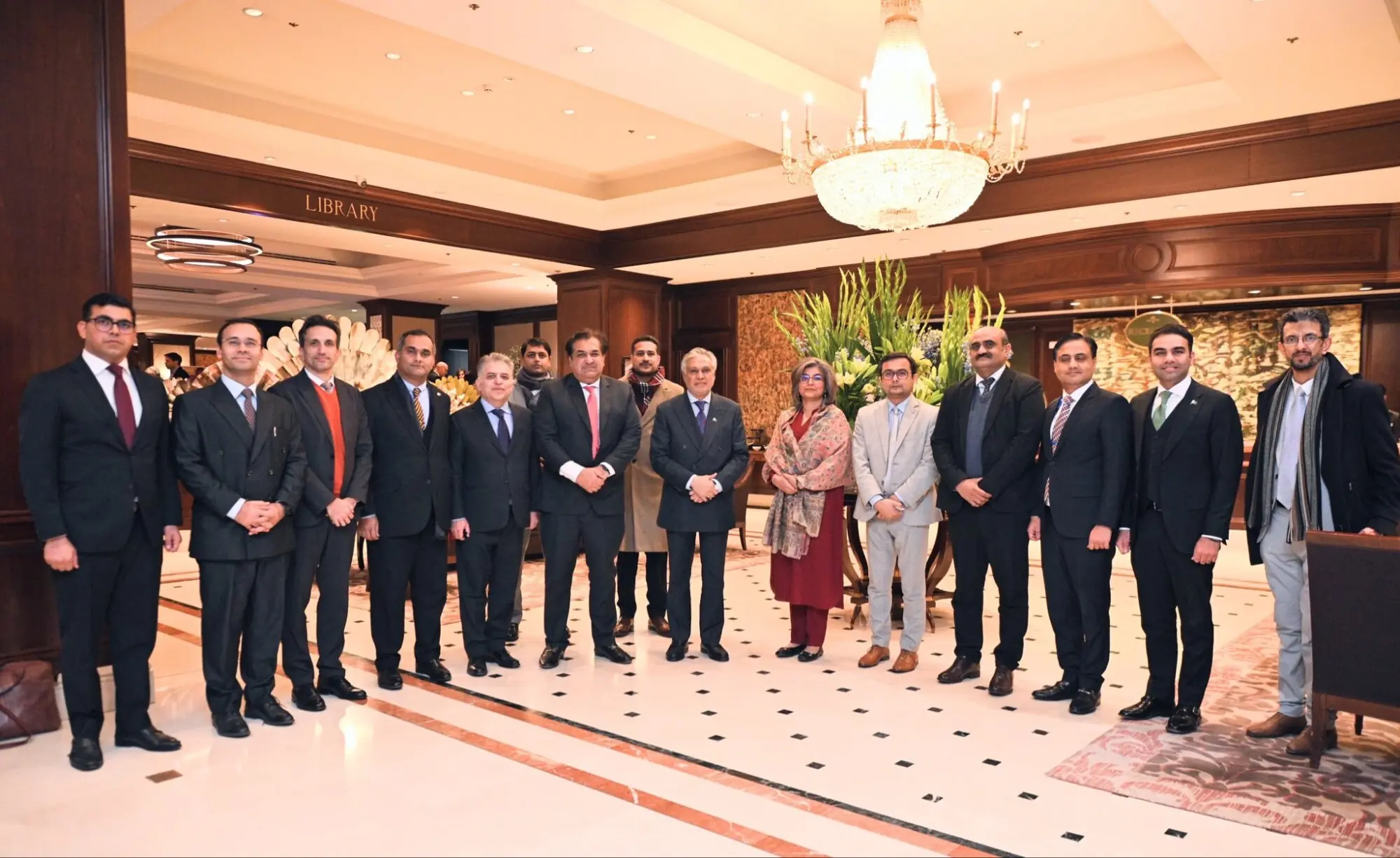
Brussels – A bold new chapter for Pakistan-EU relations as Islamabad and Brussels agree to expand cooperation across politics, trade, security, migration and global challenges.
In a significant move to elevate bilateral ties, Pakistan and the European Union (EU) have vowed to deepen their strategic partnership during the 7th Pakistan-EU Strategic Dialogue held in Brussels this month. The high level meeting reaffirmed both sides’ commitment to expanding cooperation across political, economic and security fronts, reinforcing Islamabad-Brussels relations at a time of shifting global geopolitics.
The dialogue was co-chaired by Pakistan’s Deputy Prime Minister and Foreign Minister Senator Mohammad Ishaq Dar and EU High Representative for Foreign Affairs and Security Policy and Vice President of the European Commission Kaja Kallas, under the framework of the Pakistan-EU Strategic Engagement Plan (SEP) 2019 — the roadmap for long term cooperation.
Strategic Cooperation Gets a New Boost
According to the joint press communiqué released by Pakistan’s Foreign Office, both sides agreed to not only strengthen political and security cooperation, but also expand collaboration on trade, migration, human rights, development, education and climate action — core pillars of a broad based strategic partnership.
A standout topic was the Generalised Scheme of Preferences Plus (GSP+), an EU trade incentive programme that offers developing countries preferential access to the EU market. Reaffirming its importance, both Islamabad and Brussels described GSP+ as a key driver for sustainable growth, export diversification, job creation and increased investment opportunities for Pakistan.
Economic engagement under GSP+ was highlighted across multiple reporting outlets, with the Foreign Office emphasizing its central role in boosting trade and investment ties between Pakistan and the EU.
Education, Research & Innovation on the Agenda
Building a people centric partnership also featured strongly. The dialogue included plans to expand cooperation in higher education and research initiatives, including participation in flagship EU programmes such as Erasmus Mundus and Horizon Europe — key elements for enhancing academic mobility and innovation collaboration.
These measures are designed to create broader opportunities for Pakistani students and researchers while fostering closer ties between academic institutions on both sides. Expanding people to people contact — especially through education exchange — is expected to enhance mutual understanding and cooperation in the long run.
Addressing Shared Global Challenges
Amid geopolitical uncertainty, Pakistan and the EU also broadened discussions to global and regional challenges — from food and energy security to climate change, sustainable growth pathways, and conflict resolution.
On security, the EU provided updates on developments including the ongoing Russia Ukraine war, while Pakistan stressed the need for peaceful resolutions of longstanding conflicts — specifically referencing Jammu and Kashmir. Both partners reiterated support for diplomatic solutions and respect for international law.
Support for Middle East Peace and Refugee Issues
The dialogue also touched on the Middle East peace process, with Pakistan and the EU reaffirming their backing for a two state solution for Israel and Palestine, and calling for increased humanitarian access and reconstruction efforts in Gaza.
On Afghanistan, both sides highlighted the importance of stability in the region, counter terrorism cooperation, and finding durable solutions for the safe, dignified repatriation of Afghan nationals. Brussels praised Pakistan’s longstanding hospitality to millions of Afghan refugees — an important shared priority for regional peace and humanitarian efforts.
Looking Ahead: Islamabad Hosts Next Round
Capping off the discussion, Pakistan and the EU agreed to convene the 8th round of the Strategic Dialogue in Islamabad, signaling continued high level engagement and momentum toward deepening the partnership.
This forward looking step reinforces Islamabad’s strategy to diversify strategic partnerships while engaging constructively with major global actors — from Europe to Asia. For Brussels, strengthening ties with Islamabad forms part of a broader agenda to build sustainable partnerships in South Asia that promote peace, shared prosperity and stability.
Why This Matters
The 7th Brussels dialogue marks a pivotal moment for Pakistan-EU strategic cooperation, expanding beyond traditional development aid to trade-led economic growth, climate action, education collaboration and geopolitical dialogue. With the partnership gaining depth and institutional traction, Pakistan stands to benefit from enhanced market access, investment flows and diplomatic alignment with one of the world’s largest economic blocs.
