
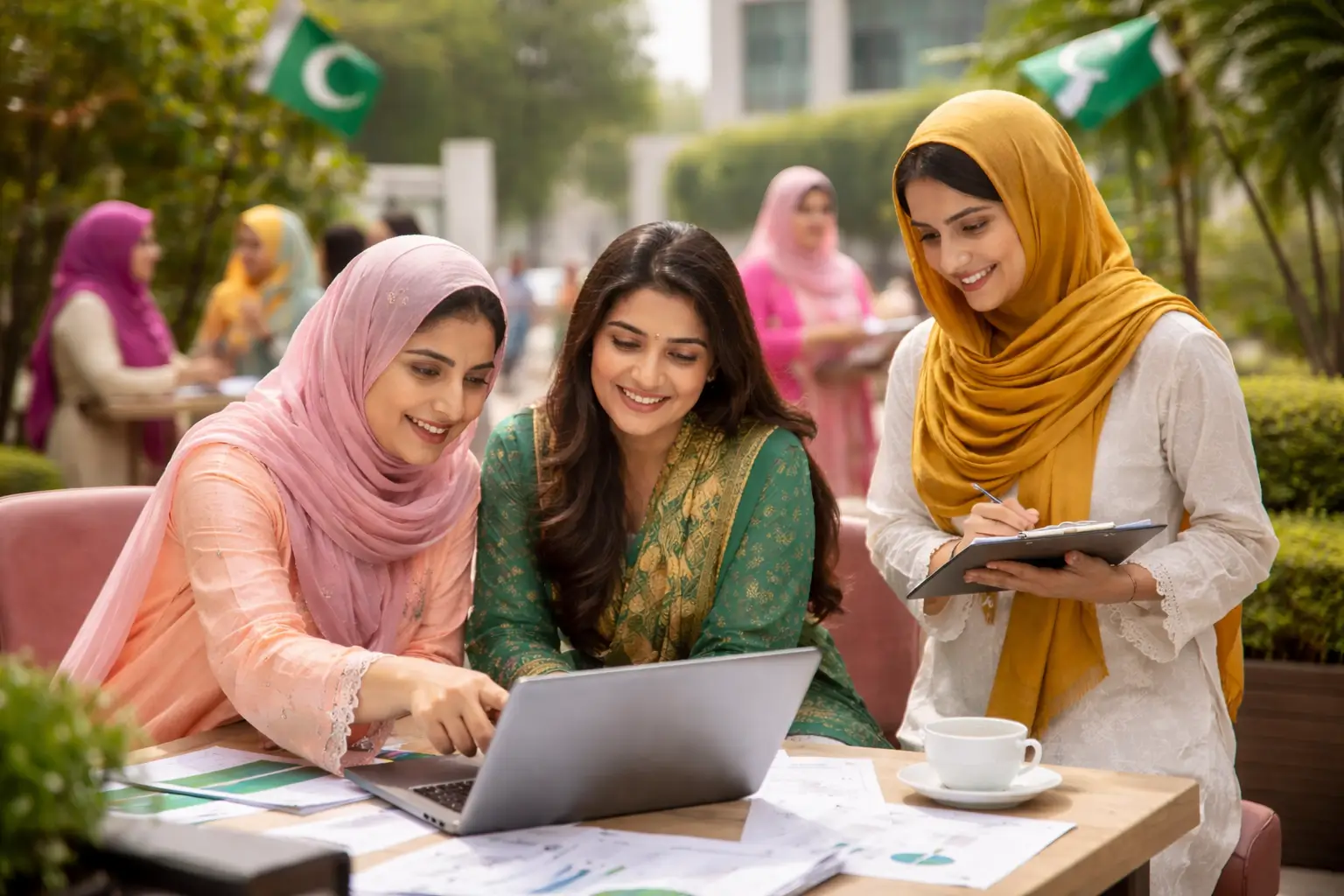
Pakistan has expanded its nationwide women entrepreneurship support programs in 2026 as part of a broader policy direction aimed at strengthening inclusive growth, financial participation, and small business development across urban and rural regions.
The initiative is being coordinated with institutional support from the Small and Medium Enterprises Development Authority (SMEDA), alongside provincial enterprise facilitation centers and financial institutions.
The expansion reflects a strategic recognition that women-led businesses represent an underutilized but high-potential segment of Pakistan’s small and medium enterprise (SME) ecosystem.
Policy Shift Toward Gender-Inclusive Enterprise Development
Historically, women entrepreneurs in Pakistan have faced structural barriers including:
- Limited access to formal credit
- Lack of collateral for loans
- Restricted market access
- Limited exposure to digital tools
- Cultural and mobility constraints in certain regions
The 2026 expansion framework addresses these challenges through structured institutional mechanisms rather than isolated training events.
Policy planners emphasize that increasing female business participation is not only a social objective but also a macroeconomic necessity to broaden the national productivity base.
Core Components of the Expansion Program
The updated framework includes:
Business Incubation & Training Centers
Dedicated incubation centers are being strengthened in cities including Islamabad and Peshawar, offering:
- Structured startup mentorship
- Business registration guidance
- Tax compliance training
- Legal advisory support
- Product development assistance
These centers aim to reduce early-stage failure rates among women-owned startups.
Digital & E-Commerce Enablement
With the rapid expansion of online commerce platforms, women entrepreneurs are increasingly entering digital marketplaces.
The program provides:
- E-commerce onboarding workshops
- Social media branding strategy training
- Online payment integration guidance
- Export documentation assistance
Digital participation significantly lowers traditional market entry barriers, particularly for home-based entrepreneurs.
Financial Access & Micro-Financing Support
Financial inclusion remains central to the initiative.
Authorities are working with partner banks and microfinance institutions to:
- Simplify loan application processes
- Introduce credit guarantee mechanisms
- Offer subsidized financing options
- Provide financial literacy education
Improved financial access is expected to enable business scaling beyond subsistence-level operations.
Economic & Social Impact Potential
Economic analysts note that expanding women entrepreneurship contributes to:
- Household income stability
- Diversified community-level economies
- Increased labor force participation
- Youth employment through SME hiring
International development research consistently shows that women-led enterprises reinvest a significant portion of earnings into education and community welfare, creating multiplier effects.
Regional Inclusion & Rural Outreach
Beyond major urban centers, the expansion framework includes outreach programs in semi-urban and rural districts where formal business participation remains limited.
Mobile training units and localized enterprise workshops are being introduced to improve accessibility in remote regions.
This regional approach aims to prevent concentration of benefits solely in metropolitan areas.
Challenges & Sustainability Considerations
Despite progress, experts highlight ongoing challenges:
- Cultural resistance in certain communities
- Market competition pressures
- Inflation affecting small-scale operations
- Supply chain disruptions
Sustained policy consistency and monitoring will be required to ensure measurable long-term outcomes.
Long-Term Vision
The 2026 expansion of women entrepreneurship programs signals a structural commitment to inclusive economic development. If effectively implemented with strong financial partnerships and regulatory support, the initiative could significantly expand Pakistan’s SME base while strengthening gender-balanced participation in economic activity.
