

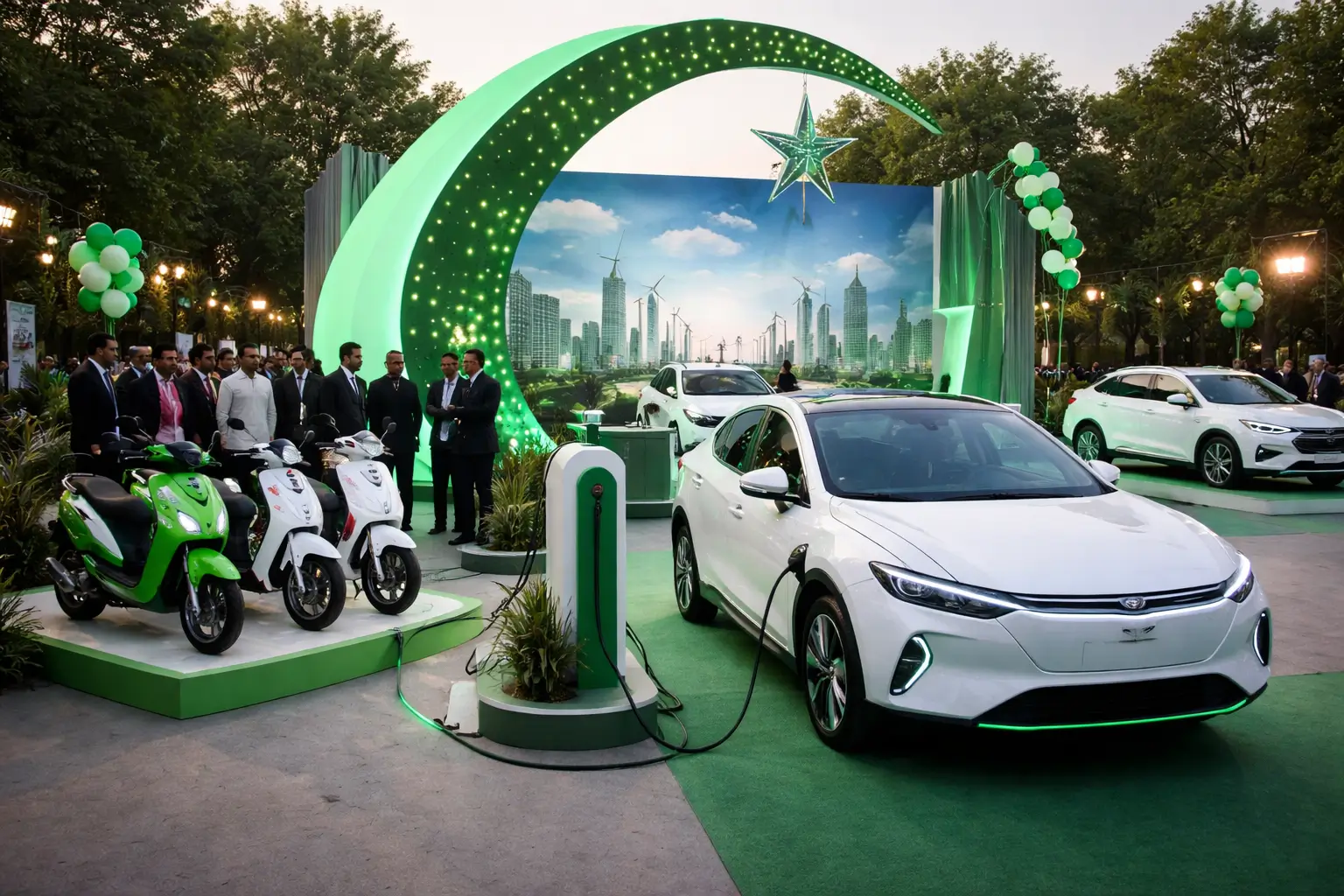
Pakistan has formally entered the implementation phase of its National Electric Vehicle (EV) Policy in 2026, marking a significant step toward sustainable transport transformation and reduced dependence on imported fossil fuels. The initiative represents a coordinated effort between federal and provincial authorities to modernize the country’s mobility infrastructure while addressing environmental and economic challenges.
The implementation phase is being supervised by the Ministry of Industries and Production in coordination with transport departments and energy regulators.
Strategic Objectives of the EV Expansion
The national EV framework aims to:
- Reduce carbon emissions from the transport sector
- Lower fuel import expenditure
- Encourage local manufacturing and assembly
- Develop nationwide charging infrastructure
- Promote green urban mobility solutions
Transport remains one of the largest contributors to urban air pollution in major cities such as Lahore and Karachi. Policymakers believe that gradual electrification of public and private transport fleets could significantly reduce particulate emissions and improve air quality indices.
Infrastructure Development & Charging Networks
A critical component of the implementation phase involves the expansion of EV charging stations across highways, metropolitan centers, and commercial zones.
Energy experts highlight the need for:
- Grid capacity upgrades
- Renewable energy integration
- Standardized charging protocols
- Public-private partnerships
The success of the policy depends largely on consumer confidence in charging accessibility and affordability.
Local Manufacturing & Industrial Impact
The EV policy is also designed to stimulate domestic industrial growth. Local assembly of electric motorcycles and small vehicles is expected to create employment opportunities and strengthen supply chain networks.
Industry analysts note that battery production, component manufacturing, and after-sales services could generate new economic segments if regulatory consistency is maintained.
Challenges & Long-Term Sustainability
Despite progress, challenges remain, including:
- High initial vehicle costs
- Limited battery recycling infrastructure
- Consumer awareness gaps
- Power distribution stability
However, experts emphasize that phased implementation and financial incentives could gradually increase adoption rates.
Conclusion
Pakistan’s EV policy implementation marks a structural shift toward green transport modernization. If infrastructure development, industrial support, and regulatory oversight remain consistent, the initiative could redefine the country’s mobility landscape over the coming decade.
