

Islamabad – February 26, 2026:
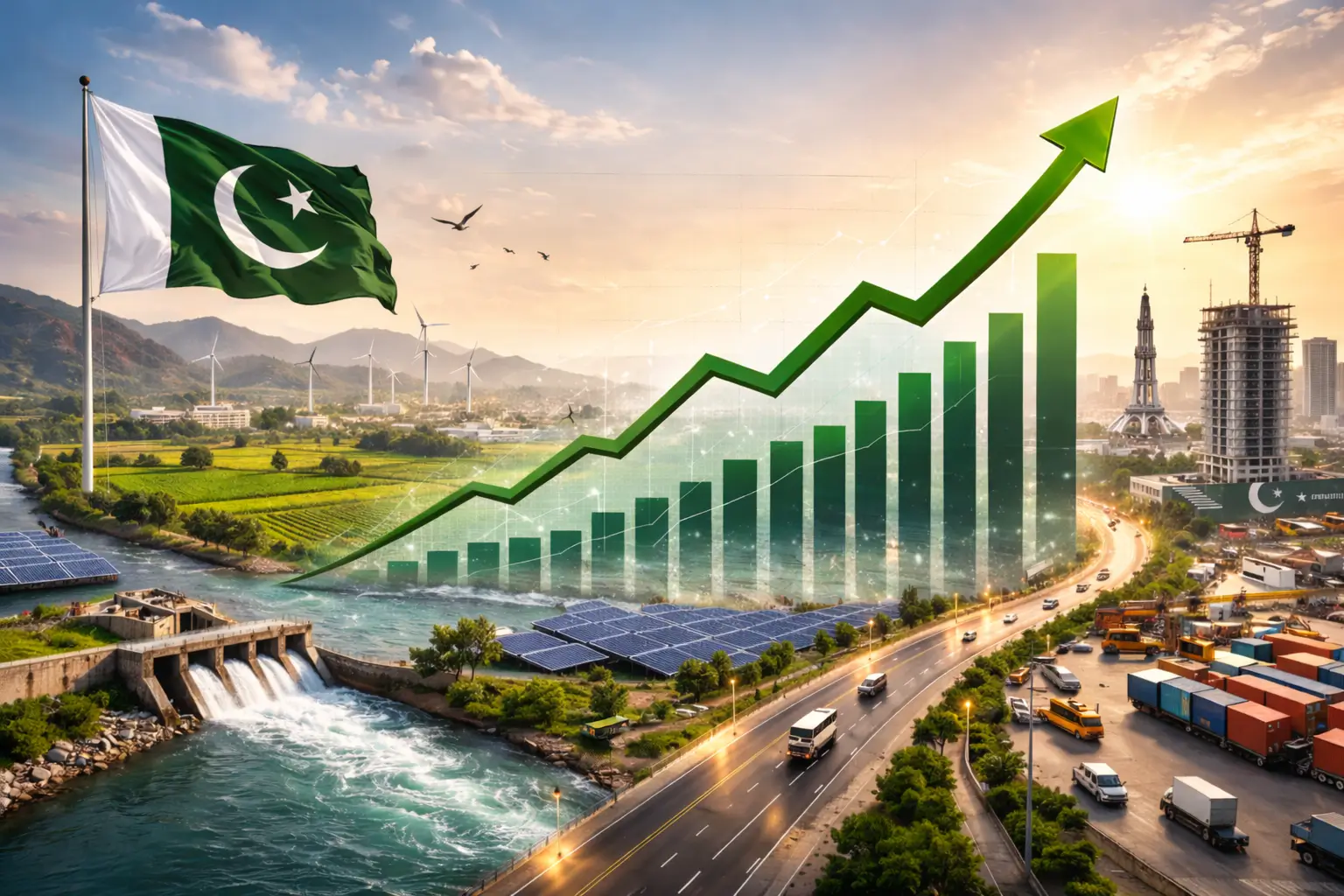
Pakistan has set an ambitious long-term economic vision to expand its economy to $1 trillion by 2035, signaling renewed policy focus on structural reforms, governance improvements, and sustainable growth. The projection was highlighted by Federal Minister for Planning, Development and Special Initiatives Ahsan Iqbal, who emphasized that consistent reform implementation could more than double Pakistan’s current economic size over the next decade.
The announcement comes at a time when policymakers are intensifying efforts to stabilize macroeconomic indicators, strengthen institutions, and unlock investment potential across key sectors.
The Vision Behind the $1 Trillion Target
Reaching the $1 trillion milestone would mark a transformative shift for Pakistan’s economic standing globally. Currently classified among emerging economies, Pakistan aims to leverage:
- Structural economic reforms
- Export-led growth strategies
- Digital transformation
- Infrastructure expansion
- Institutional modernization
According to the planning ministry’s outlook, sustained GDP growth combined with policy stability could place Pakistan among the leading developing economies in Asia by 2035.
Minister Ahsan Iqbal stressed that economic transformation requires long-term planning consistency rather than short-term stabilization measures. He reiterated that governance efficiency and institutional performance will determine whether the target becomes achievable.
Key Reform Pillars Driving Economic Expansion
Governance and Institutional Reforms
Improving transparency, accountability, and efficiency within public institutions remains central to the growth roadmap. Regulatory simplification and digitalization of services are expected to reduce bureaucratic hurdles and improve investor confidence.
Reform initiatives aim to:
- Streamline business registration processes
- Enhance tax collection efficiency
- Improve public financial management
- Strengthen anti-corruption frameworks
Institutional stability is viewed as a foundational requirement for sustainable economic growth.
Export-Led Growth Strategy
Exports are expected to play a crucial role in achieving the trillion-dollar milestone. Policymakers are focusing on:
- Expanding textile and value-added manufacturing exports
- Promoting IT and digital services
- Encouraging agricultural processing and agro-exports
- Diversifying export destinations
Pakistan’s IT sector, in particular, has shown resilience, with growing freelance remittances and international contracts contributing to foreign exchange earnings.
Digital Economy and Innovation
Digital transformation is considered a growth multiplier. Expansion of broadband connectivity, e-governance platforms, fintech adoption, and startup ecosystems are expected to boost productivity and create high-value jobs.
The government has signaled continued support for:
- Tech startups
- Freelancers
- Software export companies
- Digital payment systems
A stronger digital economy could accelerate GDP growth while reducing reliance on traditional sectors.
Energy and Infrastructure Investment
Energy stability remains essential for industrial expansion. Ongoing investments in renewable energy, hydropower, and grid modernization are designed to lower production costs and ensure uninterrupted power supply for businesses.
Infrastructure development, including transport corridors and logistics improvements, is also seen as critical for export competitiveness.
Economic Impact of a $1 Trillion Economy
If achieved, a $1 trillion economy could deliver wide-ranging benefits:
Higher Employment Levels
Economic expansion typically translates into job creation across manufacturing, services, technology, and agriculture sectors.
Improved Living Standards
Higher GDP growth can increase per capita income and expand access to education, healthcare, and infrastructure.
Stronger Global Position
Crossing the trillion-dollar mark would enhance Pakistan’s standing among emerging markets and improve international investor perception.
Increased Fiscal Space
A larger economy would strengthen tax revenues, enabling greater development spending and debt management flexibility.
Challenges on the Road Ahead
While the projection reflects optimism, experts note that several challenges must be addressed:
- Fiscal discipline and debt management
- Inflation control
- Political stability
- Policy continuity
- External account balance
Economic analysts argue that reform momentum must remain uninterrupted over the next decade to sustain the growth trajectory required for achieving the trillion-dollar benchmark.
Regional Context and Comparative Outlook
Several Asian economies have achieved rapid GDP expansion through consistent reform agendas and export-driven industrialization. Policymakers believe Pakistan can replicate similar progress by focusing on productivity, technological innovation, and global market integration.
Long-term economic transformation, however, will require coordinated efforts across federal and provincial governments, private sector stakeholders, and development partners.
Outlook: A Decade of Reform and Opportunity
The $1 trillion target for 2035 represents not just a numerical goal but a broader economic transformation vision. The coming years will determine how effectively reforms are implemented and whether Pakistan can capitalize on its demographic dividend, strategic geographic location, and emerging digital ecosystem.
With sustained governance improvements and investment in high-growth sectors, Pakistan’s economic trajectory could witness significant acceleration in the decade ahead.
