

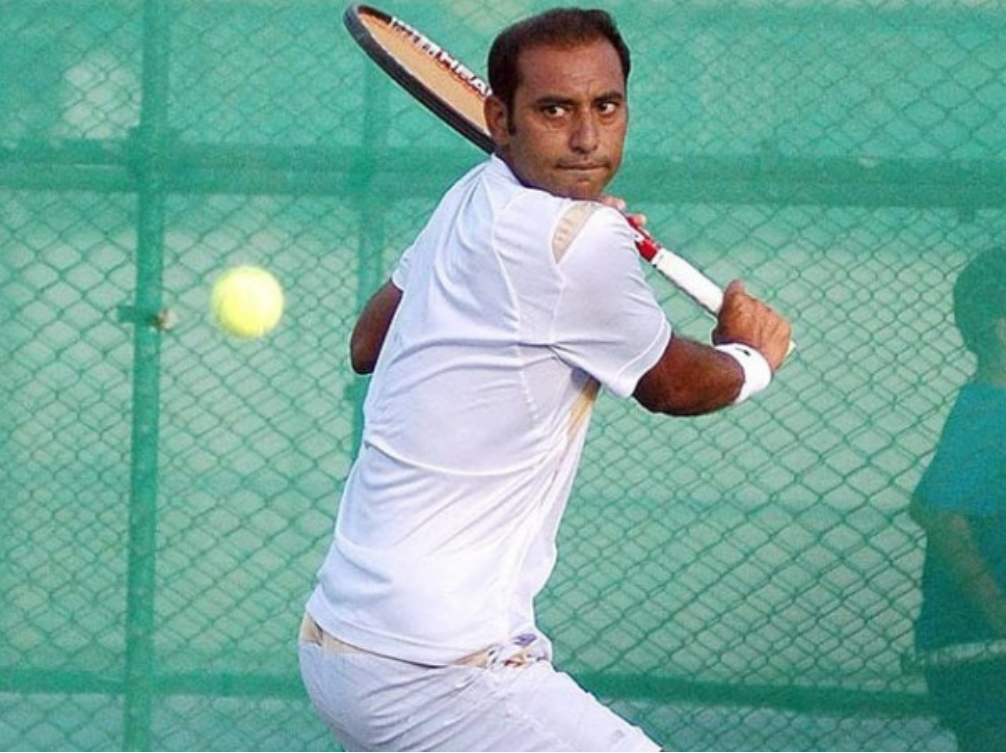
Veteran tennis star proves age is just a number with remarkable Davis Cup victory against Senegal
In the world of professional tennis, where careers often peak in the late twenties and fade by the mid-thirties, Aqeel Khan stands as a remarkable exception. The Pakistani tennis legend has once again defied conventional wisdom, becoming the eighth-oldest player in Davis Cup history to win a singles match after defeating Senegal’s Seydina Andre in a thrilling comeback victory this week.
At 46 years old, Khan demonstrated the heart of a champion when he rallied from match point down to secure a dramatic 6-7(3), 7-6(6), 6-2 victory, giving Pakistan a crucial 2-0 lead in their Davis Cup World Group II tie against Senegal. The performance was nothing short of extraordinary, showcasing the mental fortitude and technical prowess that have defined Khan’s nearly three-decade career.
A Journey That Began with Avoiding Ball Boy Duties
Born on January 30, 1980, in Karachi, Aqeel Khan’s introduction to tennis came at age nine in an unexpected way. While attending school in Karachi, he picked up a racket to avoid being assigned ball boy duties. That seemingly small decision would launch one of Pakistan’s most storied tennis careers.
Coming from a tennis family, with his father Jamil Khan serving as both his coach and a former tennis player himself, Aqeel was destined for the sport. He began competitive junior tennis in 1993 at the Pakistan International Junior Championships before turning professional in 1998. His professional debut came at the Davis Cup in Islamabad, where he defeated Sanjeev Tikaram of Pacific Oceania with a commanding performance.
Davis Cup Legend
Khan’s legacy is inextricably linked to the Davis Cup, where he has become Pakistan’s most decorated player in the competition’s history. Since his debut in 1998, he has represented Pakistan in an unprecedented 46 Davis Cup ties, more than any other Pakistani player. His partnership with fellow star Aisam-ul-Haq Qureshi has been particularly fruitful, with the duo regularly spearheading Pakistan’s campaigns in both singles and doubles competitions.
Among his most memorable Davis Cup moments was the 2004-2005 period when he helped Pakistan defeat New Zealand by winning a crucial fifth rubber against Simon Rea. The match itself was a testament to Khan’s resilience, as he prevailed in five grueling sets. This victory propelled Pakistan to the Davis Cup World Group play-offs for the first time in the nation’s tennis history, where they faced Chile in Santiago.
Khan also holds a unique record in Davis Cup lore: he participated in the longest-known tiebreak in the competition’s history. In the 2003 Asia/Oceania Group I Relegation play-off against Korea’s Kim Young-jun, the first set tiebreak extended to an incredible 36 points.
Domestic Dominance
While international opportunities were often limited due to funding constraints and the scarcity of ITF tournaments in Pakistan, Khan dominated the domestic circuit with unparalleled consistency. His record includes an astounding 18 victories at the Chief of Air Staff Khyber Cup Open Tennis Championship, multiple wins at the Federal Cup National Ranking Tennis Tournament, and titles at virtually every major national competition.
Khan has maintained his status as Pakistan’s number one player in both singles and doubles since 1999, a reign of dominance spanning over two decades. His highest ATP singles ranking of 349 came in 2004, while he peaked at 613 in doubles. Though these numbers might seem modest by grand slam standards, they represent extraordinary achievement given the limited opportunities available to Pakistani players.
International Achievements
Beyond the Davis Cup, Khan has represented Pakistan with distinction at multiple Asian Games and won medals at the Islamic Solidarity Games. In 2005, he claimed gold in both the individual doubles event (partnering with Aisam-ul-Haq Qureshi) and the team event, along with a bronze medal in singles at the games held in Mecca, Saudi Arabia.
Throughout his career, Khan captured three ITF Futures tournaments and two ITF Satellite tournaments, often having to travel to India to find competitive matches due to the lack of professional tournaments in Pakistan. His grass court prowess has been particularly noted, with grass being his preferred surface.
A Legacy Beyond Playing
Khan’s contributions to tennis extend beyond his playing career. In 2011, he coached the Sri Lankan Davis Cup team during their Group III matches, leading them to a perfect record and promotion to Group II for 2012. He has also obtained international coaching certifications, positioning himself to nurture the next generation of Pakistani tennis talent.
Defying Age and Expectations
His recent Davis Cup victory at 46 years old serves as an inspiration to athletes everywhere. While he ranks eighth among the oldest Davis Cup match winners, behind San Marino’s Domenico Vicini who won at 50 years and 11 months in 2022, Khan’s achievement is remarkable considering he continues to compete at the World Group level.
Aqeel Khan’s story is one of perseverance, dedication, and unwavering commitment to representing Pakistan on the global tennis stage. Despite facing financial constraints, limited training facilities, and fewer international opportunities than his counterparts from wealthier nations, he has carved out a legacy that will inspire Pakistani athletes for generations to come. As he continues to defy age and expectations, Khan remains living proof that with determination and skill, champions can emerge from anywhere and continue to shine regardless of the obstacles in their path.
