

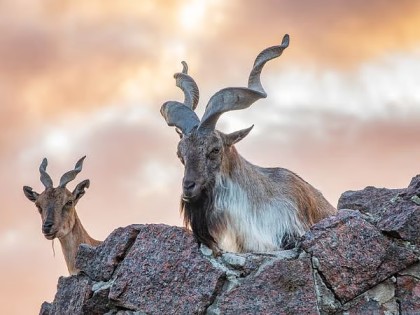
The Ministry of Climate Change and Environmental Coordination has approved trophy hunting quotas for the 2025–26 season, emphasizing that the decision is rooted in verified population surveys and scientific assessments rather than routine administrative procedures.
According to a ministry spokesperson, the quotas were issued through the CITES Management Authority of Pakistan after a thorough review of population data submitted by provincial wildlife departments. The move has been described as part of a broader effort to promote transparent and evidence-based wildlife governance in the country.
Pakistan, a signatory to both the Convention on Biological Diversity (CBD) and the Convention on International Trade in Endangered Species of Wild Fauna and Flora (CITES), aims to fulfill its international conservation commitments through regulated and sustainable-use practices, the spokesperson added.
The approved quotas cover several high-value wildlife species, including markhor, Himalayan ibex, Sindh ibex, Blandford’s urial, Punjab urial, blue sheep, and Kennion gazelle.
The ministry noted that the allocation process has been streamlined under Federal Minister for Climate Change Dr. Musadik Masood Malik, with an increased focus on transparency, accountability, and reliance on credible field data. It also acknowledged existing gaps in wildlife population surveys and announced plans to standardize survey methodologies across provinces to ensure more reliable and comparable data in the future.
Officials maintained that regulated trophy hunting, when guided by robust scientific evidence and implemented with community participation, can play a constructive role in wildlife conservation. They said revenues generated through such programs help finance conservation efforts while giving local communities a direct economic stake in protecting wildlife and their habitats.
The ministry stated that the latest quota approval is intended to support sustainable wildlife populations while strengthening community-based conservation initiatives and delivering socio-economic benefits to communities living alongside these species.
