

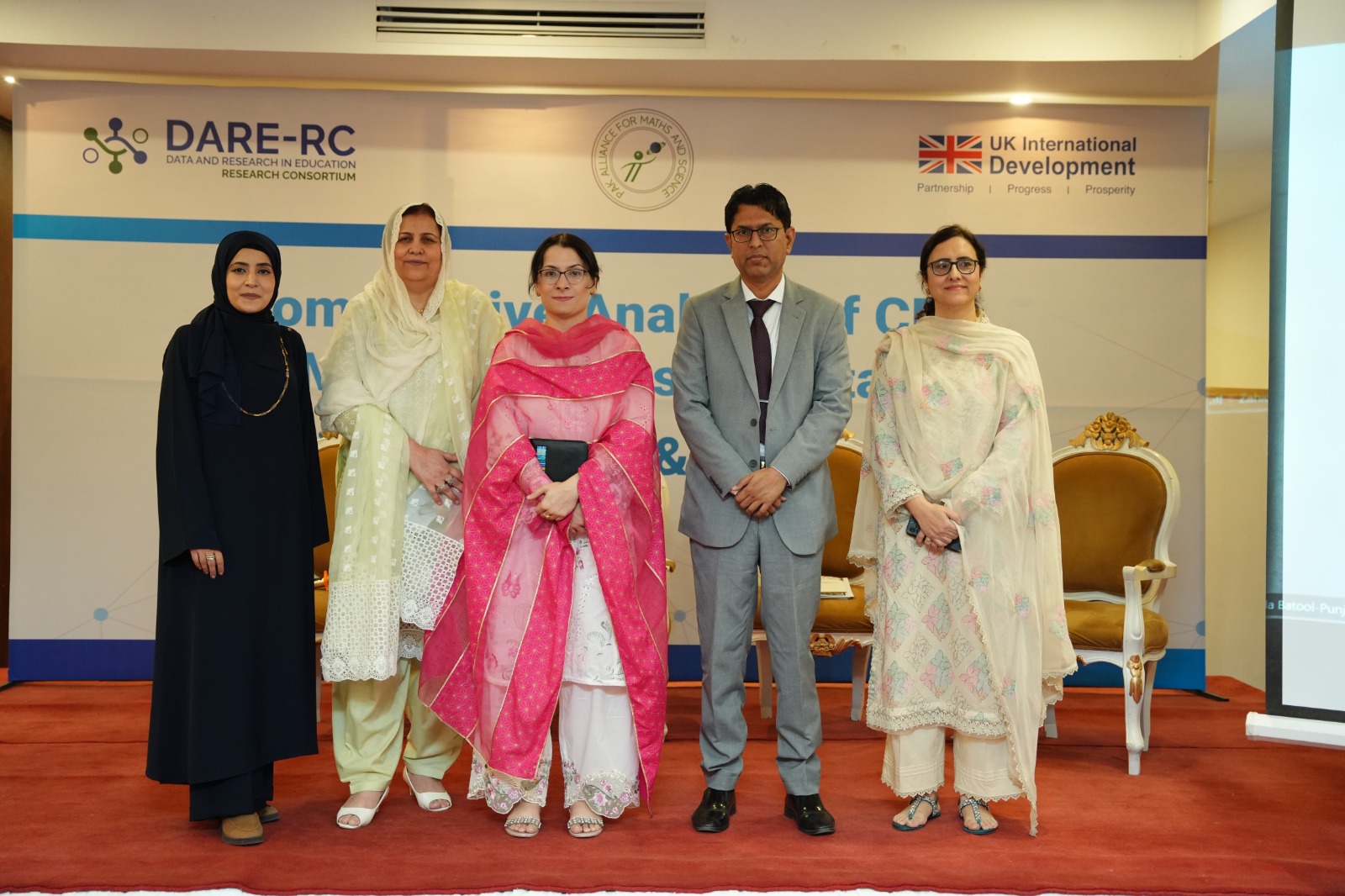
ISLAMABAD, September 17, 2026: Education stakeholders have called for greater coordination, sustainable financing and stronger use of data to improve Continuing Professional Development (CPD) systems for teachers across Pakistan.
The call came during a stakeholder roundtable hosted by the Pak Alliance for Maths and Science (PAMS) in Islamabad, bringing together federal and provincial education officials, academics, researchers, data experts and development partners to examine the design, delivery and effectiveness of existing teacher professional development initiatives.
The half-day dialogue, titled “Comparative Analysis of CPD Models Across Pakistan: Design, Delivery and Perceptions,” drew on research conducted under the Data and Research in Education-Research Consortium (DARE-RC), funded by the UK’s Foreign, Commonwealth & Development Office (FCDO).
The research examined CPD initiatives undertaken across Pakistan over the past decade and highlighted gaps in documentation, coordination and access to information about their implementation and effectiveness. Participants noted that the fragmented nature of existing information makes it difficult to develop a consolidated picture of CPD systems across the country.
Speaking during the opening session, Zainab Iqbal, Education Adviser at FCDO, stressed that teachers’ needs should remain central to CPD design.
“Teacher training needs must be the pivotal point of every CPD program design, and that design must be continuously iterative and reiterative.”
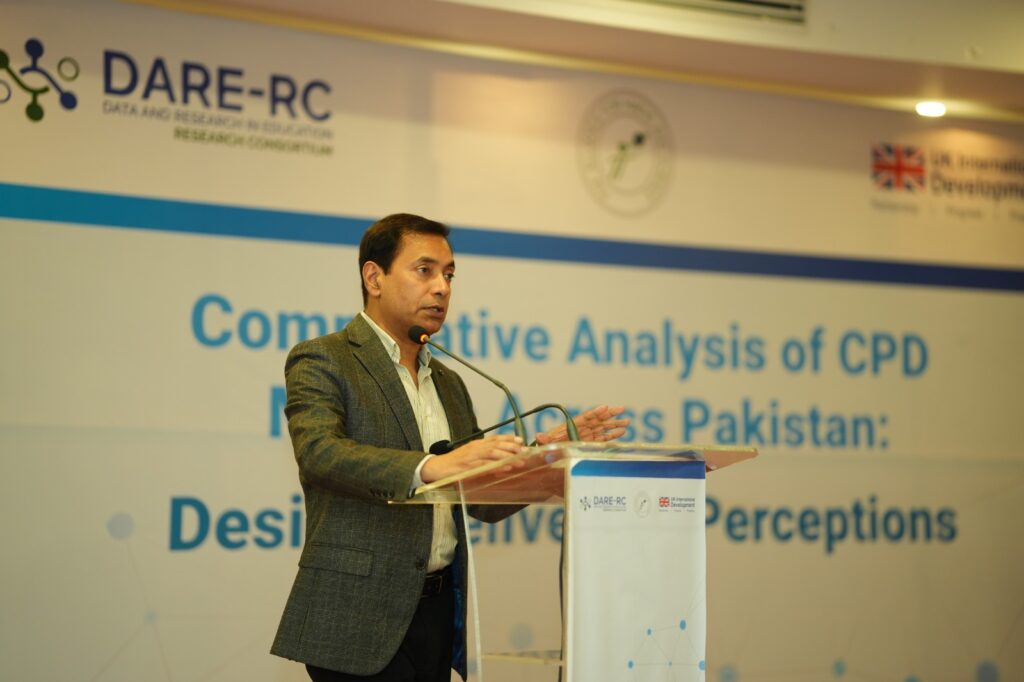
The financial structure of existing CPD systems also emerged as a key concern. Dr. Ehtesham Anwar, Team Lead at DARE-RC, said the study found that between 80% and 89% of major CPD-related budgets are allocated to employee salaries and administrative overheads, leaving limited resources for content development and operational delivery.
The research findings were presented by Areej Mahmood, followed by an interactive workshop titled “Charting Policy Actions for CPD Systems in Pakistan,” led by Zain Murtaza Maken.
The discussions focused on the need to move beyond individual CPD initiatives towards systems that are more coordinated, adequately financed and closely connected to teachers’ classroom needs.
Delivering a keynote address, Helen Kamal, Senior Education Adviser at Cambridge Education, highlighted system coherence as an important element in strengthening teacher support and improving teaching quality.
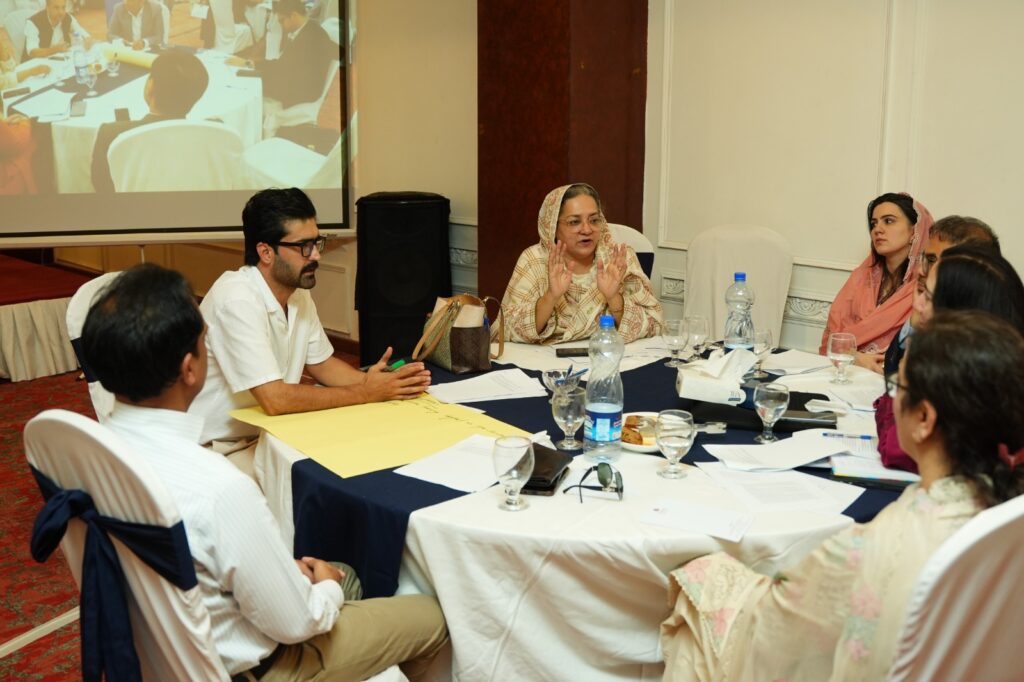
The event also featured a panel discussion moderated by Dr. Farah Nadeem, Assistant Professor at the LUMS School of Education. The panel included Riffat Jabeen, Director Academics, Educational Technology & Quality Assurance, FDE; Zahida Batool, former Director of Training & Certification, PECTAA; Dr. Safia Noor, former Assistant Director, DPD, Khyber Pakhtunkhwa; Shuhabuddin Malla, DG, PITE Sindh; and Fatima Munawar, Director, PITE Balochistan.
Panelists discussed practical measures for improving coordination between education institutions, strengthening financing mechanisms and making greater use of data in planning and evaluating CPD programmes.
The roundtable concluded with participants identifying several areas for further action, including stronger frontline support for teachers, improved data systems, sustainable financing and closer links between professional development and teacher professionalisation.
In his closing remarks, Salman Naveed Khan, CEO of PAMS, thanked participants for their contributions and underscored the need for collective efforts to strengthen teacher support and evidence-based planning across Pakistan’s education system.
The dialogue provided an opportunity for policymakers and education stakeholders to translate research findings into practical discussions on strengthening teacher professional development systems across the country.
