

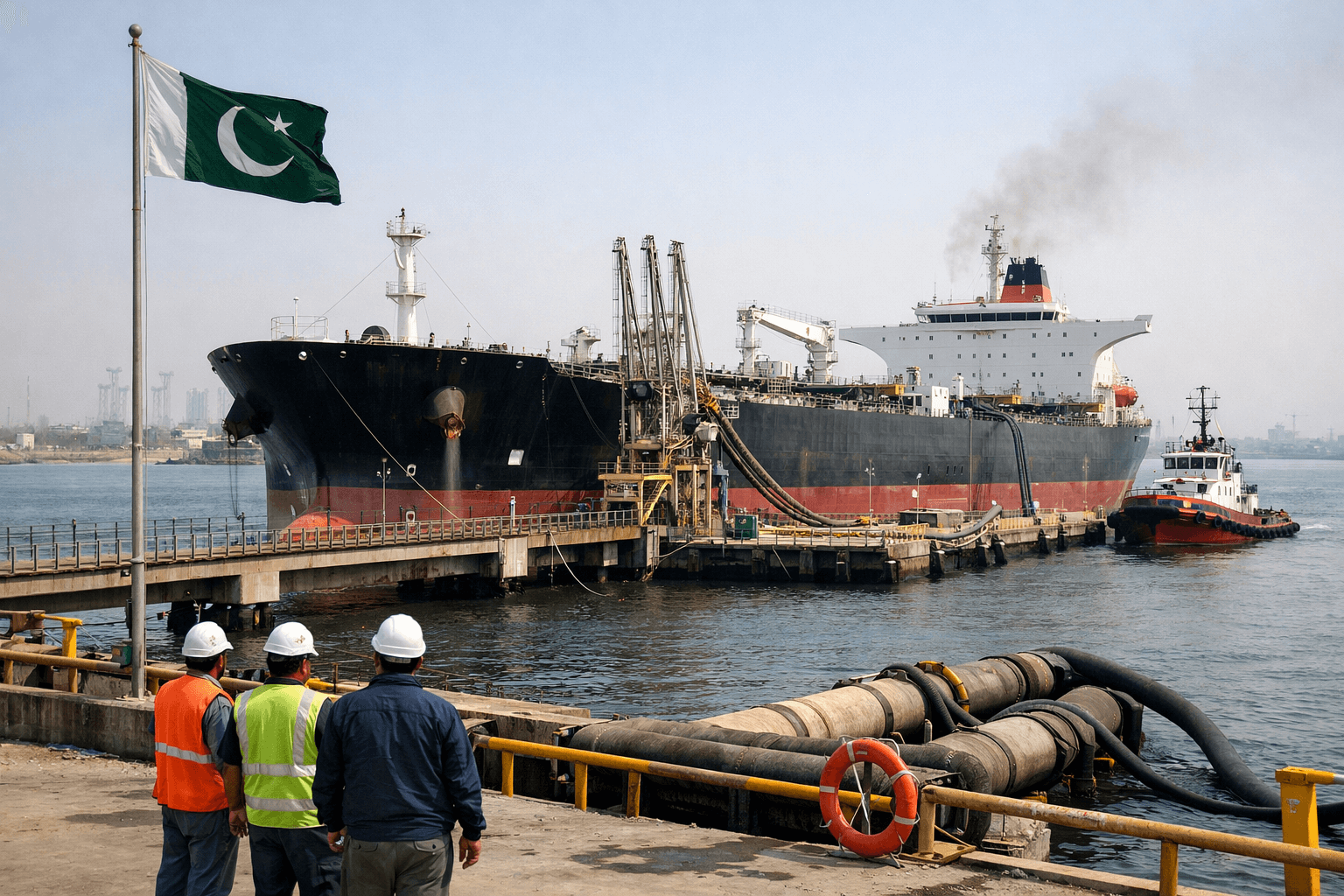
Pakistan has successfully received its first crude oil shipment since rising geopolitical tensions in the Strait of Hormuz, involving United States, Israel, and Iran. The arrival of this shipment brings relief to citizens and businesses, as concerns over petrol shortages had escalated due to potential regional supply disruptions.
The tanker MT Nave Atropos, carrying 50,000 tonnes of petrol, has docked at Port Qasim, ensuring the continuity of the country’s fuel supply. Following this, two additional tankers are expected to arrive soon: MT Spross Two, transporting 55,000 tonnes, and MT Sea Clipper, carrying 34,000 tonnes of petrol. These shipments are part of Pakistan’s strategic import plan to maintain stability in the domestic fuel market.
Government Monitoring and Assurance
The government has emphasized that fuel availability remains secure. A fuel supply monitoring committee, chaired by Muhammad Aurangzeb, reviews energy sector developments daily to ensure uninterrupted supply. Authorities have assured the public that contingency measures are in place to prevent shortages or sudden price spikes.
In addition to the shipments already en route, the government has confirmed that additional fuel consignments from Fujairah and Oman are underway, further strengthening supply resilience.
Strategic Significance of the Strait of Hormuz
The Strait of Hormuz is one of the world’s most important maritime routes for crude oil transport, accounting for a significant portion of global oil shipments. Any disruption in this chokepoint can immediately affect oil-importing countries, including Pakistan. The successful docking of MT Nave Atropos, despite heightened tensions in the region, underscores the country’s proactive energy planning and ability to safeguard essential imports.
Energy experts have highlighted that timely shipments and vigilant monitoring are crucial for ensuring Pakistan’s energy security, particularly during periods of geopolitical instability. The government’s coordinated approach with port authorities and importers has been critical in preventing any disruptions to the fuel supply chain.
Outlook for Fuel Availability
With additional shipments expected to arrive shortly, Pakistan is projected to maintain steady petrol and diesel availability over the coming weeks. The government’s active supervision, coupled with strategic stock management, aims to protect citizens and businesses from the impacts of potential global oil supply fluctuations.
The arrival of MT Nave Atropos and the expected subsequent shipments provide reassurance that Pakistan’s fuel supply chain remains robust, even in the face of international uncertainties. This development is expected to stabilize domestic markets, maintain normal fuel prices, and support uninterrupted industrial and transport activities.
Conclusion
The successful delivery of Pakistan’s first crude oil shipment amid regional tensions marks a positive development for the country’s energy security. It reassures citizens and businesses that fuel supplies remain stable and highlights the government’s proactive measures in monitoring, planning, and managing energy imports.
As Pakistan continues to navigate global geopolitical challenges, such strategic energy management will be essential in maintaining economic stability and meeting domestic demand for petrol and diesel.
