

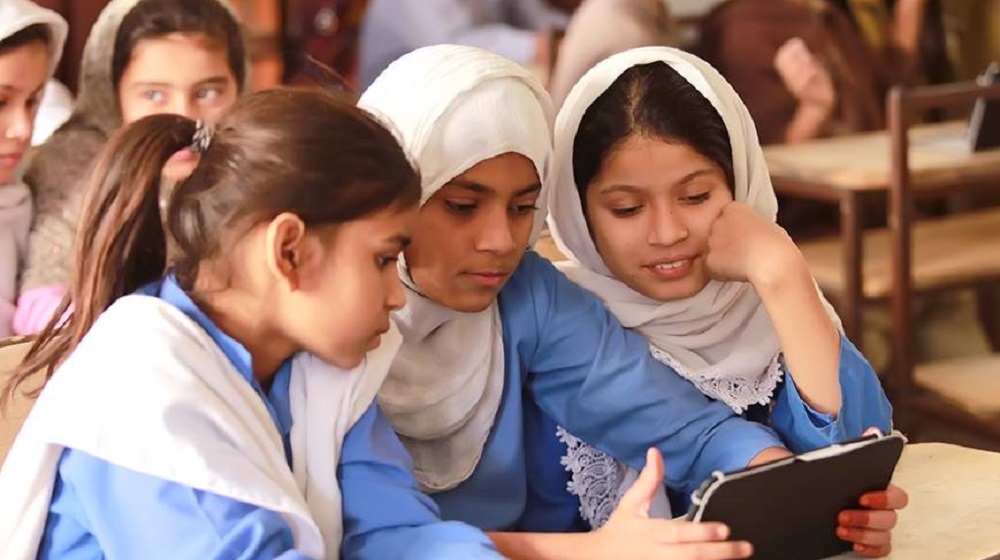
Pakistan has achieved remarkable progress in bridging the digital divide and improving educational access, according to recent data showing transformative changes in literacy rates, internet penetration, and school enrollment across the country.
The nation’s literacy rate has reached 63 percent, marking a substantial improvement in educational outcomes for millions of Pakistanis. This advancement reflects sustained efforts to expand access to quality education and reduce educational disparities across urban and rural regions.
Perhaps most striking is the dramatic expansion in digital connectivity throughout Pakistan. Household internet access has nearly doubled, surging from 34 percent to an impressive 70 percent. This exponential growth demonstrates the rapid digitalization of Pakistani society and represents one of the most significant technological transformations in the country’s recent history. The increase means that approximately seven out of every ten households now have internet connectivity, fundamentally changing how Pakistani families access information, conduct business, and connect with the wider world.
Individual internet usage has seen equally impressive gains, with the proportion of internet users jumping from 17 percent to 57 percent of the population. This more than threefold increase indicates that digital technology is no longer confined to urban centers or privileged communities but has become increasingly accessible across diverse demographic groups. The expansion of mobile internet services and improved telecommunications infrastructure has played a crucial role in driving this digital revolution.
On the education front, Pakistan has made meaningful progress in reducing the number of out-of-school children. The percentage of children not attending school has decreased from 30 percent to 28 percent. While this may appear to be a modest percentage point reduction, the absolute numbers tell a more compelling story. The total number of out-of-school children has dropped from approximately 25.3 million to around 20 million, meaning that roughly 5.3 million additional children have gained access to education.
These interconnected improvements in literacy, digital access, and school enrollment suggest a positive feedback loop where increased connectivity supports educational initiatives and vice versa. Internet access enables distance learning opportunities, provides students with educational resources, and helps connect remote communities with educational institutions and online learning platforms.
The surge in household internet penetration also has significant implications for economic development. Improved connectivity creates opportunities for digital entrepreneurship, remote work, e-commerce, and access to online financial services. For students and professionals alike, increased internet access means better opportunities for skill development, online education, and participation in the global digital economy.
However, despite these encouraging trends, challenges remain. With 28 percent of children still out of school and approximately 20 million young Pakistanis lacking educational access, significant work lies ahead to achieve universal education. Similarly, while 70 percent household internet penetration represents major progress, it also means that three out of ten households still lack this increasingly essential service.
The improvements in literacy and digital connectivity position Pakistan to better compete in an increasingly technology-driven global economy. As more citizens gain both foundational literacy skills and digital literacy through internet access, the country builds crucial human capital for future economic growth and social development.
These statistics reflect years of investment in telecommunications infrastructure, educational programs, and policy initiatives aimed at expanding access to both education and technology. The convergence of improved literacy rates with expanded digital access creates promising conditions for accelerated development and provides a foundation for continued progress in closing educational and digital gaps that have historically limited opportunities for millions of Pakistanis.
